
How to Search Criminal Dockets
Minnesota Court Records Online, called MCRO, is the remote starting point. Any Isanti County criminal docket search begins there. Pick Name, Case Number, Citation Number, or Attorney. Then use Additional Search Options to set Criminal as the category and Isanti as the county. A person-name query needs both a last and a first name. A case number works better, since pending defendant-name searches can miss some pending results. Before opening a result, check the court location, case number, filing date, case category, party role, and status. MCRO is a public search layer, not a certified record. Need a document tied to a known case? Use MCRO Document Search. It accepts letters, numbers, and hyphens in a case number. Spaces can trigger an error.
- Open MCRO Case Search and choose the search mode that matches the information available.
- Limit the result to Criminal and County, then select Isanti before running a broad name search.
- Use a known file number, such as a correctly formatted criminal number, when one is available.
- Verify the result header, then read the Register of Actions from the newest event back through the case history.
- Use the courthouse terminal or Court Administration when an available public record needs closer review or an official copy.
Note: A matching name alone never identifies an Isanti County criminal case. Confirm the court location and the file number before you rely on any result.
Isanti Criminal Case Numbers
Every Isanti County District Court criminal file carries the two-digit county prefix 30. A case number like 30-CR-26-252 breaks into parts. There is the county prefix, the CR case type, the two-digit filing year, then the sequence. The pattern helps confirm a result belongs in the Isanti criminal docket. It says nothing about the allegation, the result, or the person involved. Traffic matters can carry a citation number alongside the court case number. The official Minnesota traffic guidance separates payable traffic cases. It also covers criminal or mandatory-appearance cases. When a citation produces a CR file, read both documents. Check the criminal Register of Actions and the citation instructions before drawing any conclusion about a setting or how to respond.
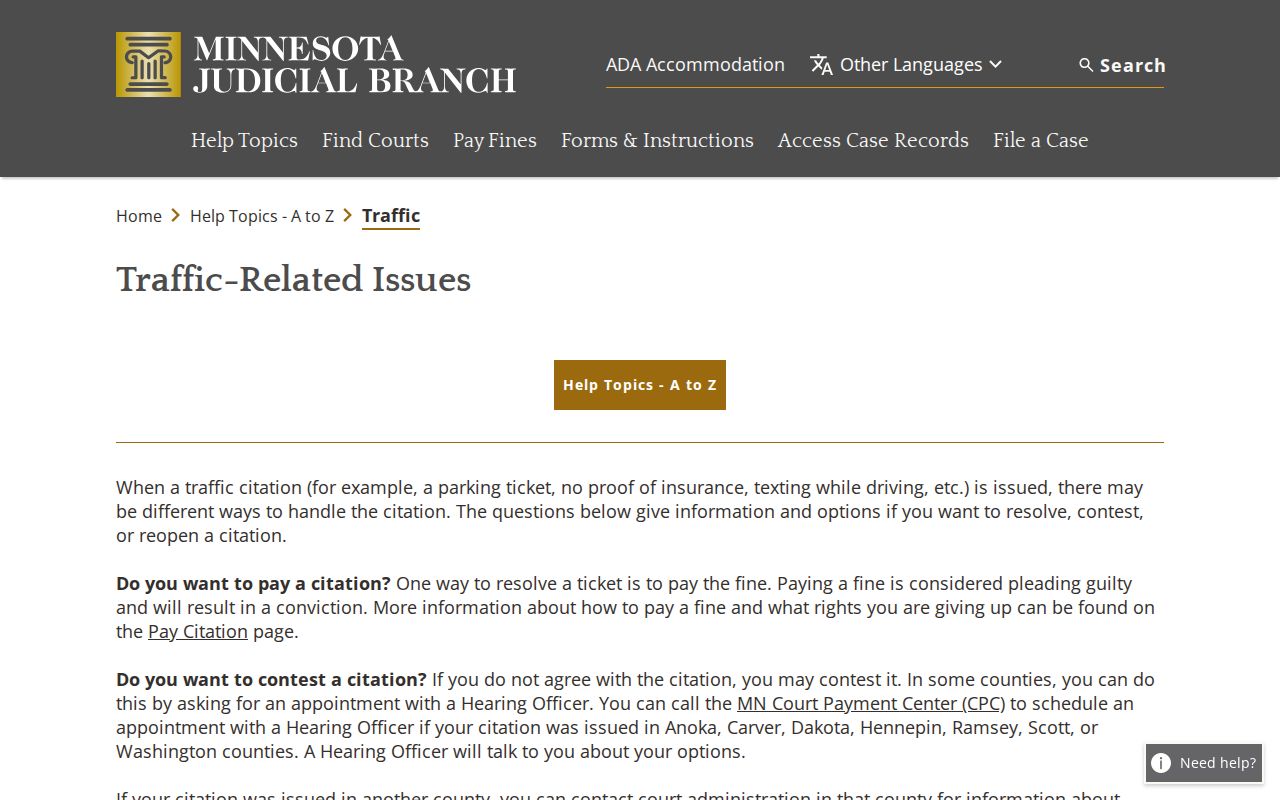
Keeping the formats straight ties an Isanti criminal docket search to the actual court file, not to a guessed case type.
What a Criminal Docket Shows
An MCRO criminal case view can show plenty. The header comes first. Then come parties and roles, charges and amended charges, events, hearings, dispositions, bond or bail activity, financial lines, related cases, and document controls where public documents exist. Read the header, then the event list, then hearings and any disposition. A filing or calendar label is only a procedural record. It never substitutes for the court-entered outcome.
| Case number | Local format such as 30-CR-26-252, plus venue, filing date, status, and judicial officer. |
|---|---|
| Charges | Charge descriptions, counts, and amended-charge history when public and displayed. |
| ROA events | Filings, notices, orders, document index numbers, and other chronological case events. |
| Hearings | Date, time, location or connection information, officer, and setting type for prior or scheduled hearings. |
| Disposition | A court-entered plea, dismissal, sentencing, or other outcome field when it has been entered. |
Some public documents filed on or after July 1, 2015 are available remotely for listed major and minor criminal case types. The current access matrix still controls. An ROA event with no document button does not mean nothing was filed.
Isanti Criminal Name Search Limits
A pending criminal defendant-name search can return nothing even when the case exists. The official MCRO guidance offers alternatives. Try a case number, citation number, attorney name, or Minnesota attorney bar number. A dismissal or continuance-for-dismissal can also sit in the pending criminal category. That can happen when no conviction has been entered. A search label is not an outcome. Too many results? Filter to Isanti, add a filing-date range or case status, and verify the result header. Too few? Check spelling, and never combine a wildcard with the Sounds Like option. The state payment and citation instructions explain why a citation number may be the better starting point for a traffic-related court file.
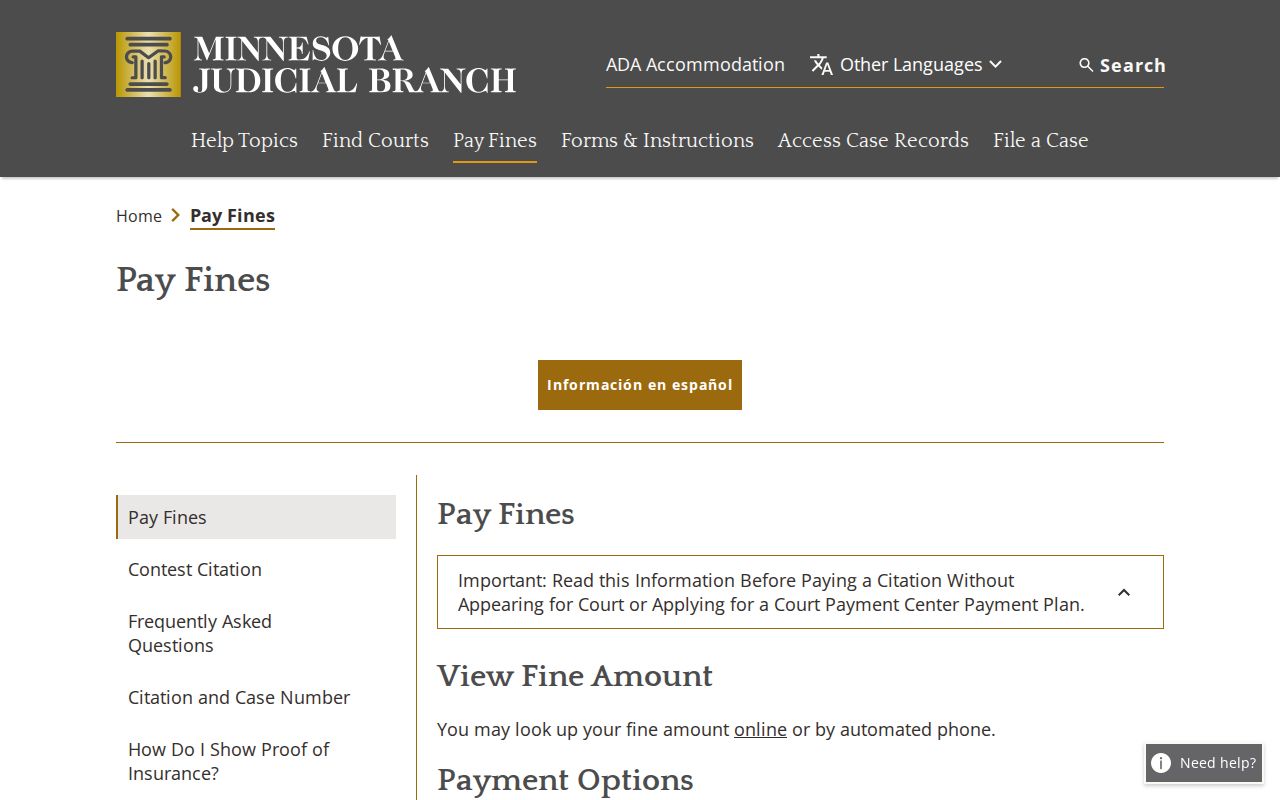
When an Isanti criminal docket still will not appear remotely, the lawful next layer is the public terminal or Court Administration. Never draw an inference from an empty search result.
Stages on a Criminal Docket
Isanti calendar entries carry labels like First Appearance, Initial Appearance - Rule 8, Arraignment, Omnibus Hearing, Plea Hearing, Sentencing, Bail Hearing, Probation Violation Hearing, Review Hearing, and Evidentiary Hearing. Each label marks a scheduled procedural stage. It does not prove the hearing happened. It does not show that someone appeared or that a conviction resulted.
Docket flow: Filing → Arraignment → Pretrial → Plea or Trial → Disposition → Sentencing
Compare any calendar listing with the Register of Actions. Also check the later order or disposition entry. A first appearance is not a plea. A plea alone does not describe the final judgment or sentence. The official Isanti daily calendar helps with a scheduled setting. But it is not the complete case history.
Isanti Criminal Record Access Levels
Isanti criminal records sit in three public-access layers. MCRO covers the permitted remote layer. It supplies case, Register of Actions, hearing, judgment, and selected-document information. A courthouse terminal opens the public-view MNCIS environment for broader permitted inspection. Court Administration handles identified documents, certified copies, and transcript request directions.
| Access route | Best use | Important limit |
|---|---|---|
| MCRO | Search an Isanti criminal case, ROA, hearing, or public document remotely. | Remote coverage and document availability are limited by the current access rules and matrix. |
| MPA Courthouse | Inspect statewide public case data at a district-courthouse terminal. | In-person access remains subject to the same public-access boundaries. |
| Court Administration | Request an identified local copy, certification, or transcript direction. | Staff cannot decide which document is legally useful to request. |
The Tenth District records instructions place a computer terminal in the Isanti courthouse law library for most public court records. That terminal is a second search layer. It is not a route around a restriction.
Which Court Holds Criminal Dockets
Isanti County District Court keeps the county's criminal docket. It sits inside Minnesota's Tenth Judicial District, at 555 18th Avenue SW, Cambridge, Minnesota 55008. The official Isanti County District Court page lists criminal matters. Those matters fall under the court's original jurisdiction. No separate city or municipal criminal court operates in Isanti County.
Need a copy or docket help? Contact Isanti County Court Administration. The County Attorney prosecutes criminal matters but does not hold the public court docket. Appeals go to the Minnesota Court of Appeals. The trial-level Register of Actions, though, stays with the District Court itself.
Isanti County Court Administration
Isanti County Courthouse
555 18th Ave SW
Cambridge, MN 55008
General court: 763-290-7020
Advance copy line: 763-689-2292
Isanti Criminal Filing and Search
Minnesota eFile and eServe, called eFS, is a filing and service tool for case participants. It is not an Isanti criminal docket search. Attorneys, government agencies, and guardians ad litem must e-file statewide; self-represented users may opt in under Judicial Branch rules. Charging documents stand outside the general electronic-filing rule.
For a public search, start with MCRO or the law-library terminal. A filed document carries an event title, a date, and a document index number. Use those details to pinpoint what you need. The official criminal filing-code index holds the full filing labels and security levels.
Need a name, number, or record check? The wider instructions sit on the Isanti County case search route.
Public Access and Sealed Criminal Dockets
Public access in Minnesota is not a simple yes or no. An Isanti criminal Register of Actions can be public while a linked document stays redacted, restricted, confidential, or sealed from remote view. Juvenile information faces strong limits. A dismissed criminal case stays public unless an expungement order says otherwise. And an online record that turns up empty proves nothing about whether a file ever existed.
Key Rules:
Minnesota Rule of Public Access 8 governs inspection, copying, Register of Actions access, calendars, remote access, and fees.
Minnesota Rule of Public Access 4 identifies restricted-access categories and protected information.
Minnesota Statutes Chapter 609A governs criminal expungement and the sealing of covered records.
The Minnesota Public Data Practices Act supplies general government-data terminology. But Judicial Branch file access runs mainly on court rules and court process. The official section 13.03 text is reference material, not a way around those rules.
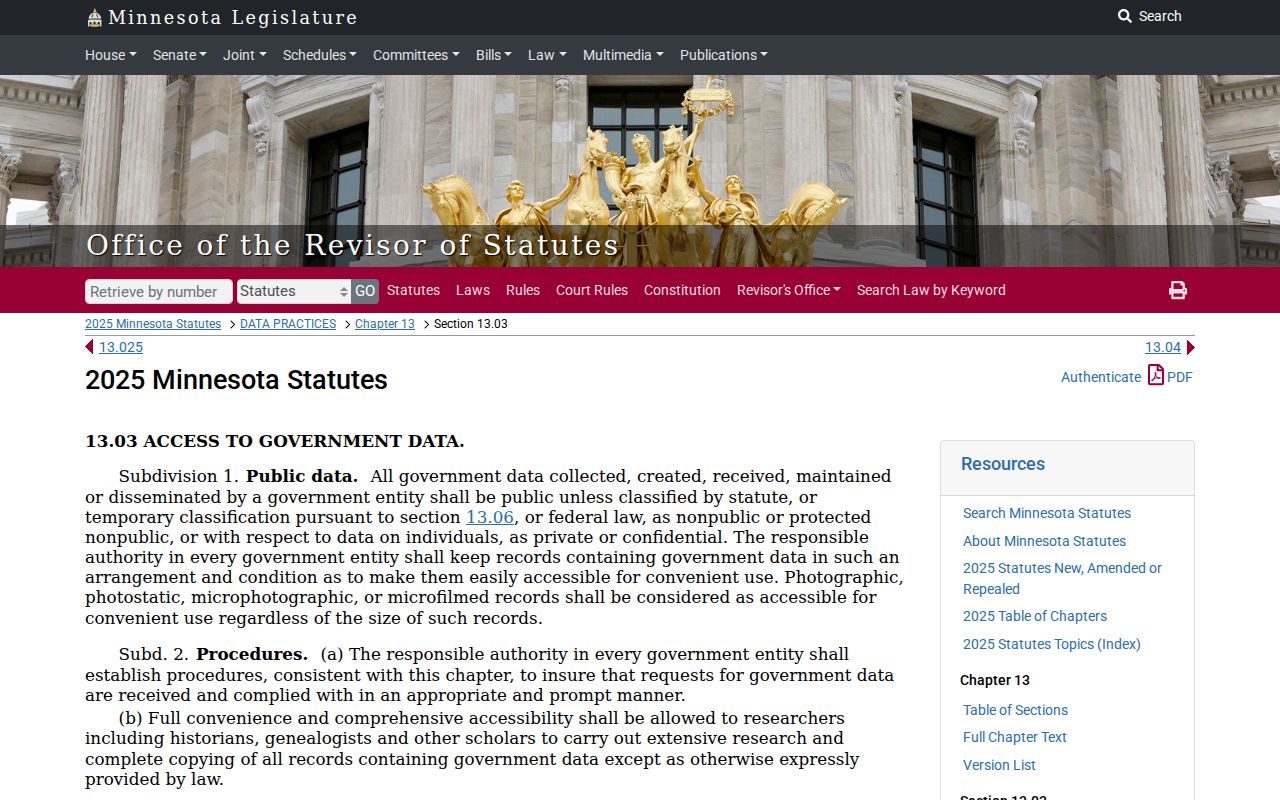
The distinction matters here. An Isanti criminal docket can list a public event while keeping related records closed to remote access.
Isanti Criminal Copy Requests
Want a plain, certified, exemplified, or certified/exemplified copy? Name the document by title, date, or index number. Add the Isanti case number if you have it. The current statewide copy form sets plain copies at no fee, certified and exemplified copies at $14 per document, and certified/exemplified copies at $28 per document. The live fee schedule governs current amounts.
Mail an identified request to Isanti County Court Administration at the courthouse address, or bring it to the counter. Local instructions ask for five days on mailed requests. They also suggest calling the advance copy line before you come in. Under the form, plain nonconfidential copies can go by mail, pickup, fax, or email; certified handling follows current court direction. The court page's official email form is a contact route only, not a promise of instant documents.
The official CON101 access-request route serves a different purpose. It targets confidential or sealed records. It does not make a restricted file public, and it is not an ordinary copy request.
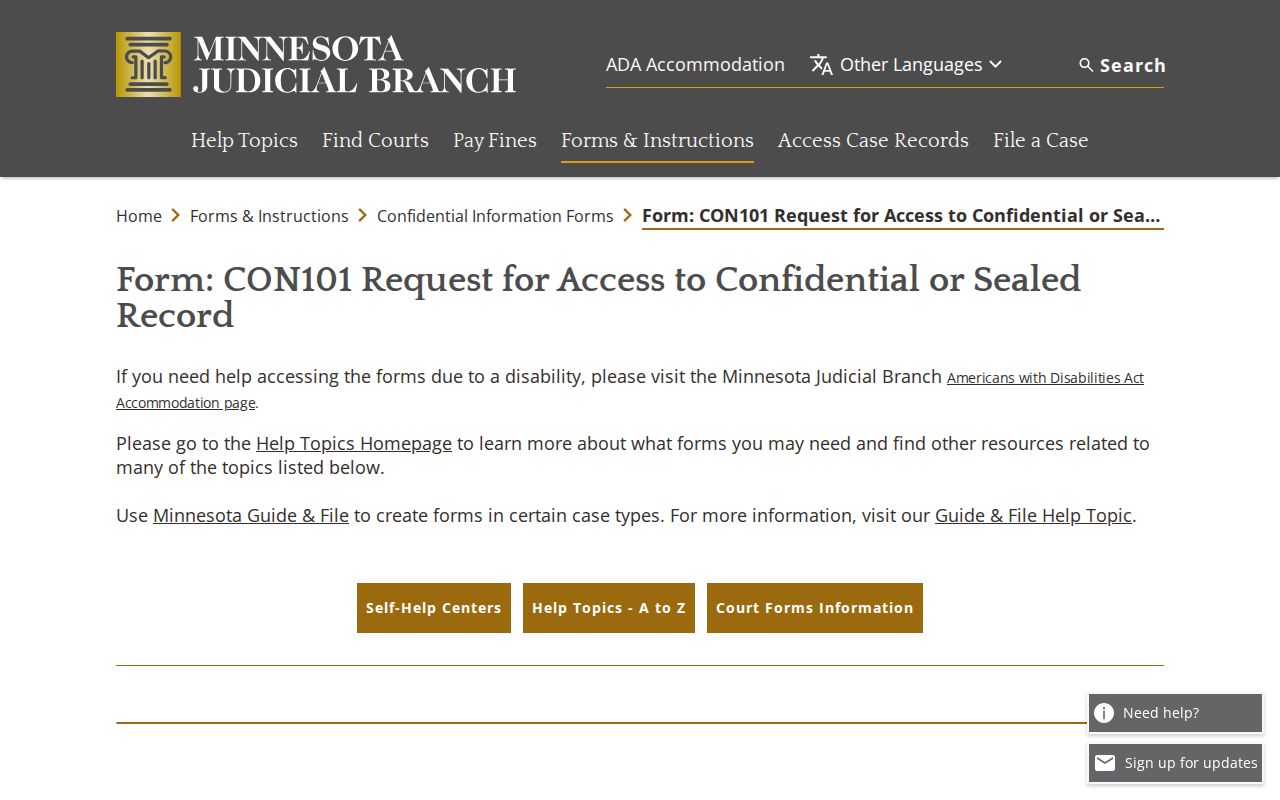
That separate path preserves the boundaries on Isanti criminal records, even when a case heading or event is public.
Note: A transcript is a written record a court reporter prepares on request and payment, not a document that comes automatically with the ROA.